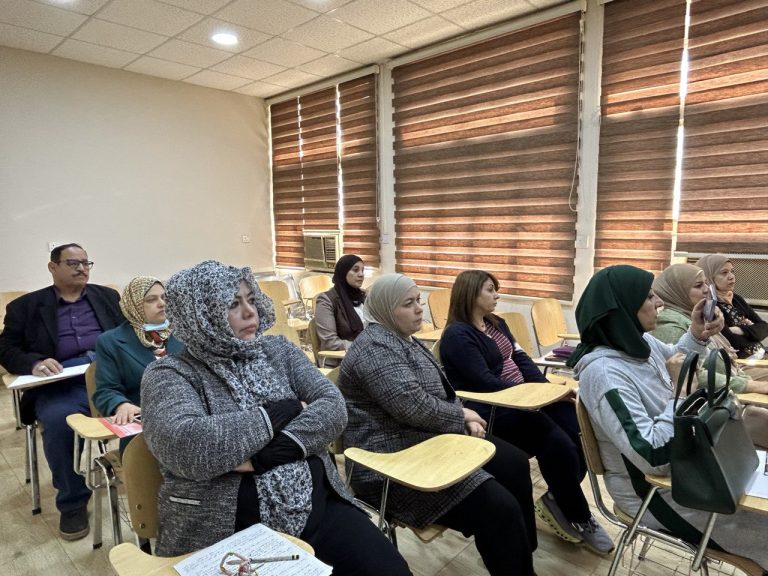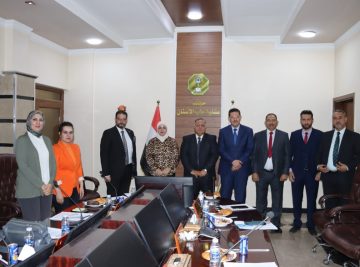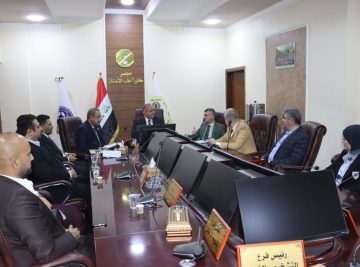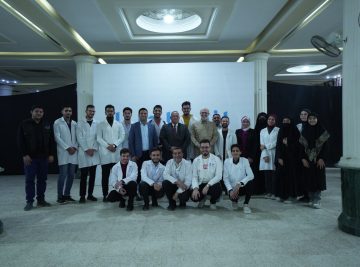
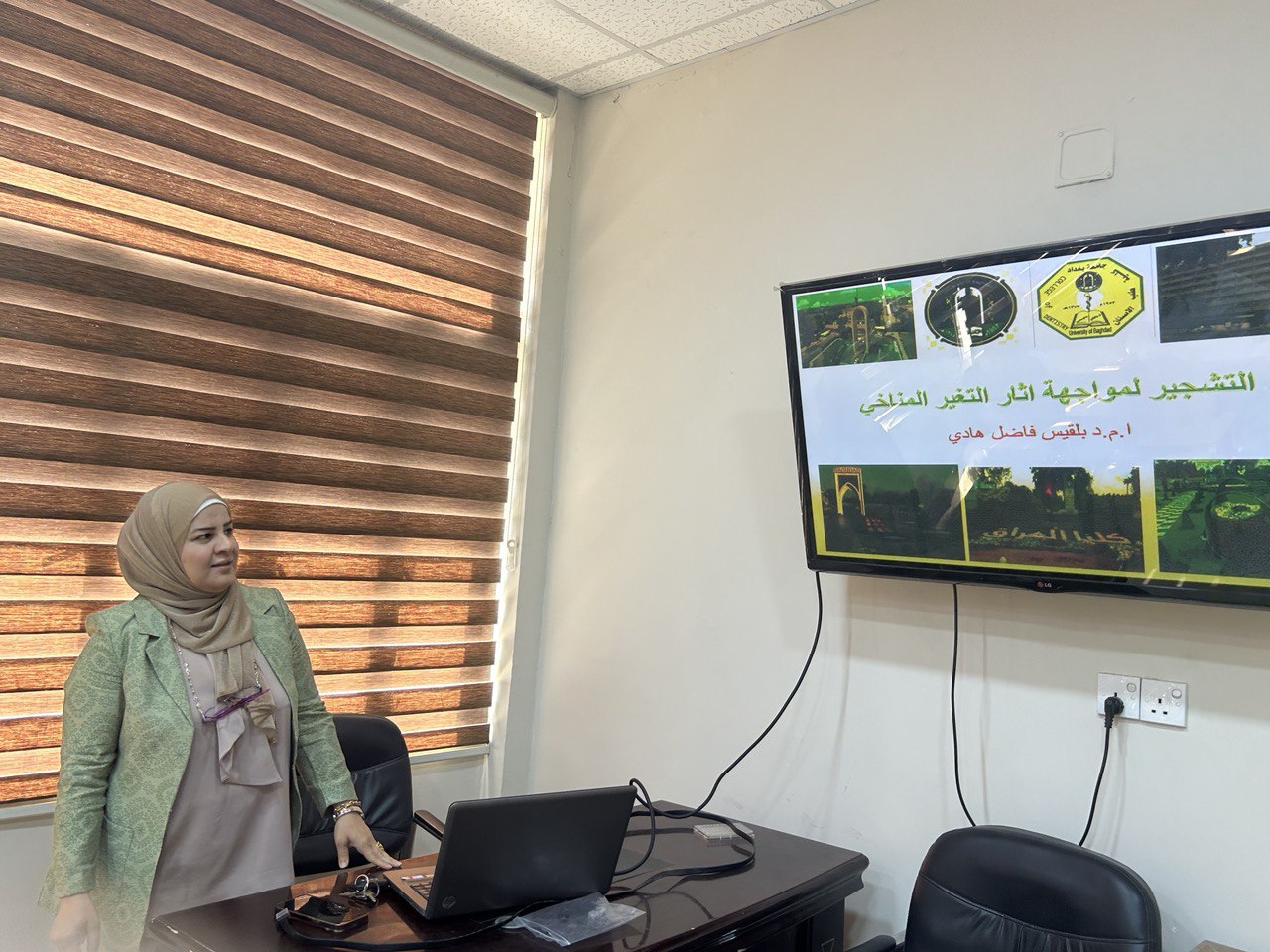
Under the patronage of the respected Dean of the College of Dentistry, Professor Dr. Raghad Abdul Razzaq Mohammed, and on the occasion of National Tree Day, the College of Dentistry at the University of Baghdad organized a workshop entitled “Tree Planting to Combat the Effects of Climate Change.” The workshop was delivered by Assistant Professor Dr. Balqees Fadhil Hadi and attended by a number of faculty members and staff of the college.
The workshop aimed to present the effects of climate change on Iraq in general, and on the central and southern governorates in particular, as they suffer from drought, rising temperatures, and increasing desertification. It also highlighted tree planting as one of the means and solutions to confront the impacts of climate change in Iraq.
The workshop included several key topics, including:
1. The shrinking of green spaces and planted areas.
2. Clear planning for tree-planting processes by selecting suitable tree species and appropriate planting locations.
3. Highlighting the advantages and disadvantages of two types of trees—Albizia and Acacia—through a comparison to guide proper species selection.
Workshop Recommendations:
1. Encouraging tree planting and expanding green areas. In addition to providing a suitable habitat for many living organisms, trees absorb carbon dioxide from the air, store it, and release oxygen, thereby maintaining the balance of gases in the atmosphere.
2. Avoiding the selection of Albizia trees for planting purposes, as they are undesirable due to their high water consumption, dense shade, and extensive surface root systems, which prevent other trees from growing nearby and may damage infrastructure.
3. Choosing Acacia trees for planting because they require minimal follow-up care after planting. They possess a self-defense system against wild animals and harsh climatic conditions. They may only need fertilization once annually (though monthly fertilization may be required at the early growth stage), and they require little to no water.