Under the supervision of the Dean of the College of Dentistry, Professor Dr. Ali Ismail Ibrahim
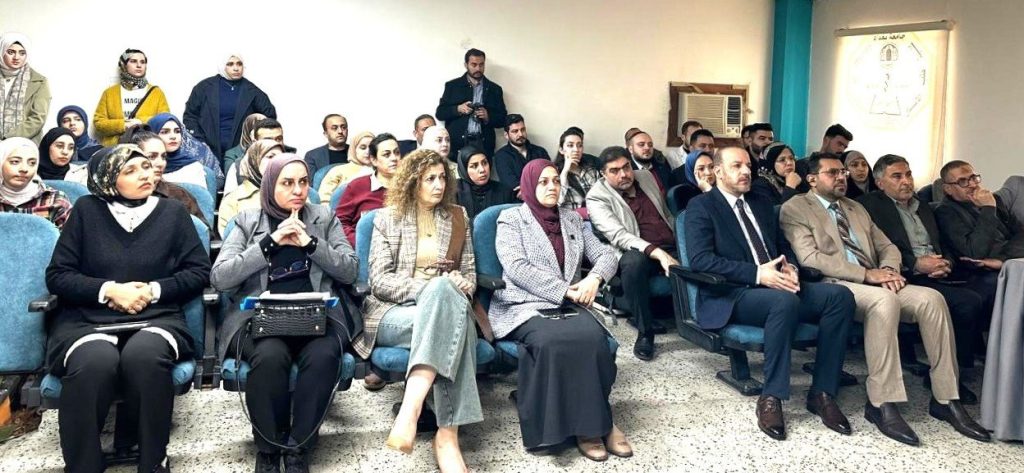
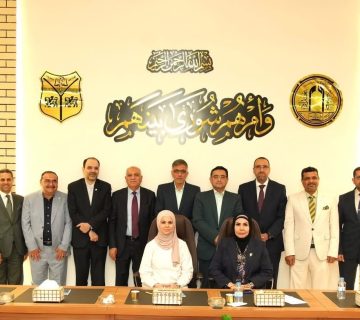
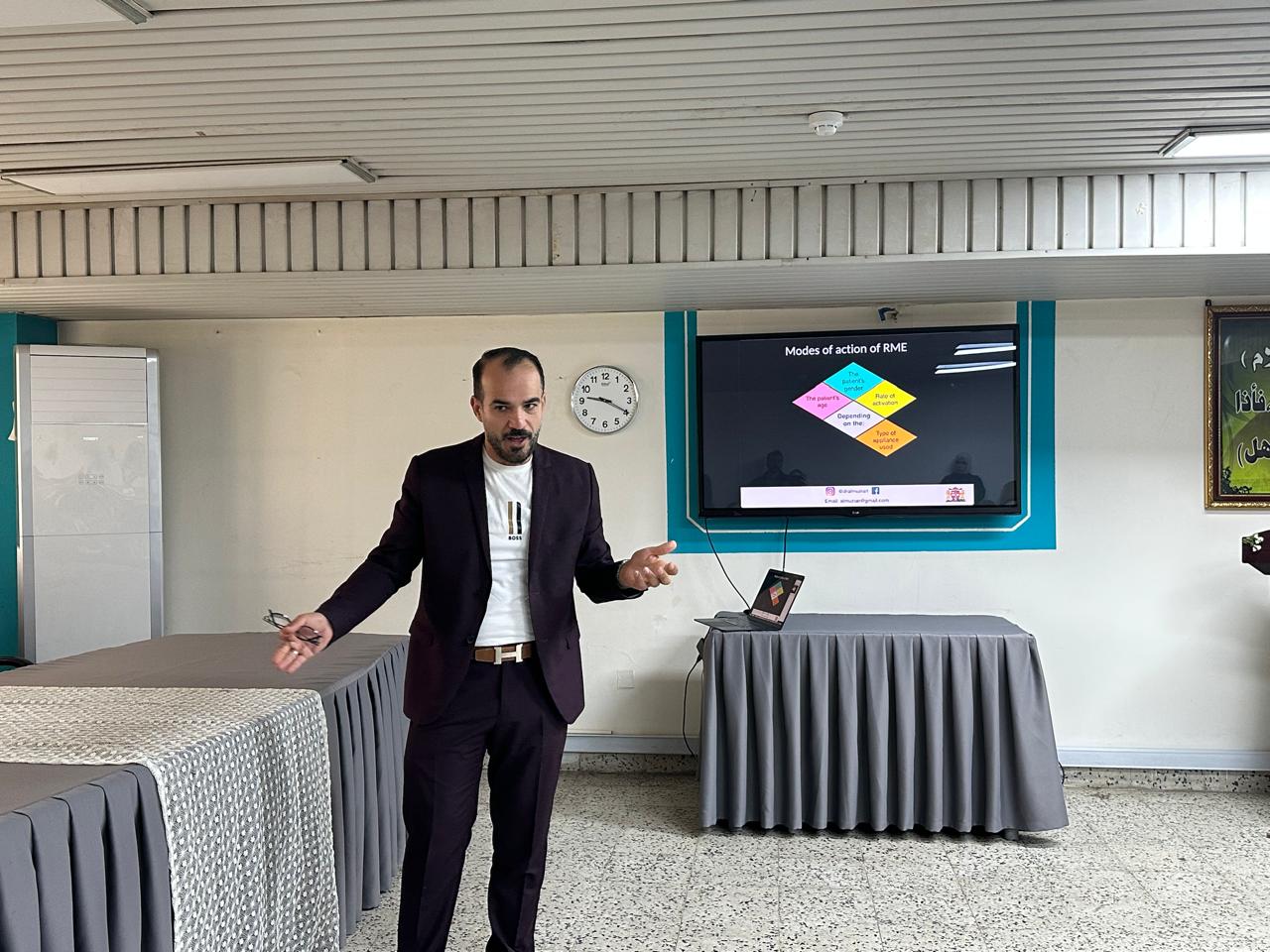
The College of Dentistry at the University of Baghdad organized a scientific seminar entitled “The New Era of Rapid Maxillary Expansion Protocols.” The seminar was presented by visiting scholar Dr. Mohammed Al-Mazyan from the UK and attended by several faculty members.
The seminar aimed to introduce the latest concepts and contemporary protocols in the field of rapid maxillary expansion, highlighting their clinical development and their role in improving orthodontic treatment outcomes based on modern scientific evidence.
The seminar covered several scientific topics, including the historical development of rapid maxillary expansion, the biological and mechanical basis of its mechanism, and the mechanism of the palatine suture’s response to treatment. It also reviewed the latest protocols used for children, adolescents, and adults, and discussed the differences between traditional, surgical, and implant-supported expansion (MARPE). The symposium also addressed the criteria for selecting the appropriate device and determining the optimal treatment timing, as well as factors influencing the success of angioplasty, such as patient age and bone density. Furthermore, it highlighted the evaluation of clinical outcomes and long-term stability, the structural and histological changes associated with treatment, potential complications, and ways to minimize them. The symposium emphasized the importance of 3D CBCT imaging and modern digital technologies in treatment planning and improving the accuracy of results.
The symposium recommended the following:
• Adopting modern, evidence-based protocols.
• Conducting accurate diagnoses before selecting the appropriate angioplasty technique for each case.
• Enhancing practical training in modern angioplasty techniques and MARPE.
• Monitoring treatment cases to ensure long-term stability.
• Continuing scientific research to keep pace with advancements in this field.