Under the patronage of the Dean of the College of Dentistry, Professor Dr. Raghad Abdul Razzaq Mohammed,
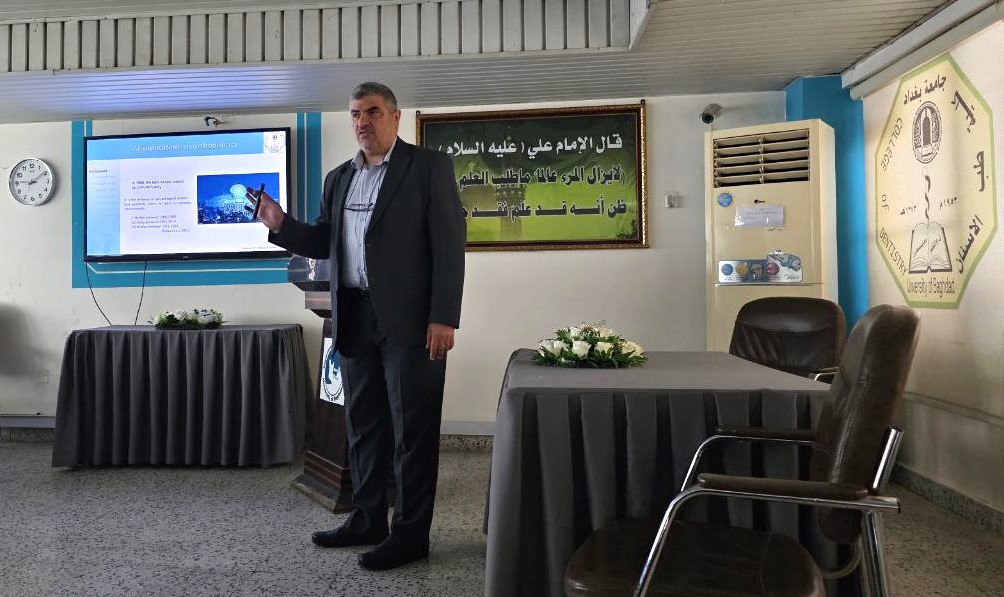
The College of Dentistry at the University of Baghdad organized a continuing education course entitled “The Fourth Continuing Education Course,” with the participation of several faculty members.
The course aimed to enhance the efficiency of orthodontic treatment and ensure a healthy and safe working environment through the application of modern sterilization methods, mastering precise practical steps, and differentiating between open and closed exposure techniques for impacted canines to achieve the best clinical and periodontal results. It also aimed to develop the awareness and skills of orthodontists in prevention, diagnosis, and the selection of modern treatment techniques, ensuring patient and dentist safety and achieving better therapeutic and periodontal outcomes.
The course included several key topics, most notably:
1- Sterilization methods in orthodontics.
2- Simple steps for successfully fitting clear aligners.
3- Open versus closed canine exposure. The course recommended strengthening disease prevention through strict adherence to sterilization procedures using modern, highly efficient tools and materials, thus contributing to reducing the transmission of infections within the clinic. It also emphasized the importance of raising health awareness among orthodontists to ensure a safe treatment environment. Furthermore, it recommended understanding the types of orthodontic appliances and their functions in improving tooth movement, mastering the correct procedural steps for fitting them using custom-made trays, and avoiding common errors that could affect the quality of adhesion or the appearance of these appliances. The course also called for improving clinical performance by achieving greater stability and more accurate treatment outcomes, in addition to gaining a clear understanding of the causes and patterns of canine impaction, and enhancing clinical and radiographic diagnostic skills, which will positively impact the accuracy of treatment planning and the effectiveness of results.