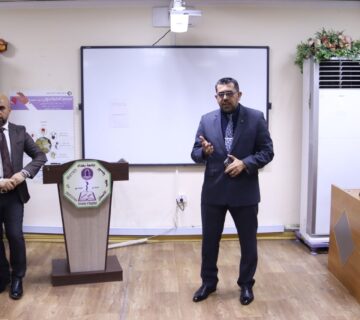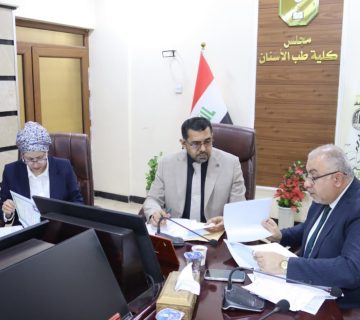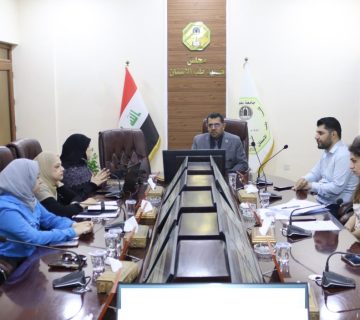

Under the patronage of the Dean of the College of Dentistry, Prof. Dr. Raghad Abdul Razzaq Mohammed, the College of Dentistry at the University of Baghdad organized a continuing education course entitled “Chemical Laboratory Safety” with the attendance of several faculty members.
The course aimed to highlight the importance of laboratory safety for those working in laboratories and the necessity of being familiar with the procedures and rules required to ensure their safety and the safety of the laboratory.
The course covered several key topics, including:
- The concept of laboratory safety as a set of procedures and rules designed to protect laboratory workers from injury, safeguard property from damage or loss, and provide safe working environments.
- Risks associated with laboratory work, including worst-case scenarios, how to deal with them, wise practices, protective facilities, and equipment needed to minimize exposure to hazards.
- A brief explanation of the most important laboratory safety regulations that must be followed to avoid potential harm and ensure the safety of laboratory workers and those around them.
- Safe use of chemical solvents in laboratories, with awareness of associated risks and the safety measures required.
The course concluded with several recommendations:
- Raising awareness among laboratory workers about the importance of laboratory safety through seminars and lectures presenting the necessary procedures and rules to follow.
- Ensuring containment of materials in case of spills or malfunctions, labeling all containers and processing equipment, and posting emergency numbers on laboratory doors.
- Adhering to laboratory safety regulations and taking the necessary measures to secure occupational safety for laboratory workers, those around them, and the environment as a whole, protecting it from pollution and harm to living organisms.
- Ensuring safety conditions when using chemical solvents in laboratories, such as proper ventilation systems and availability of personal protective equipment.