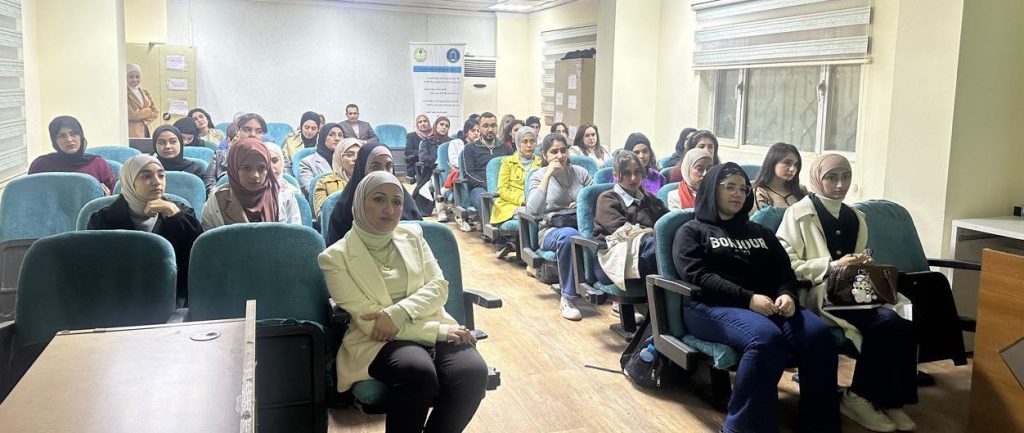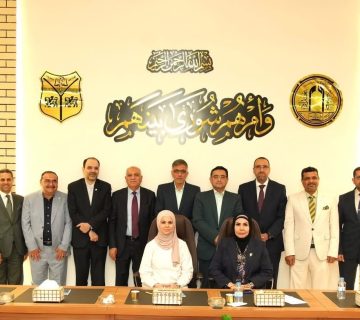
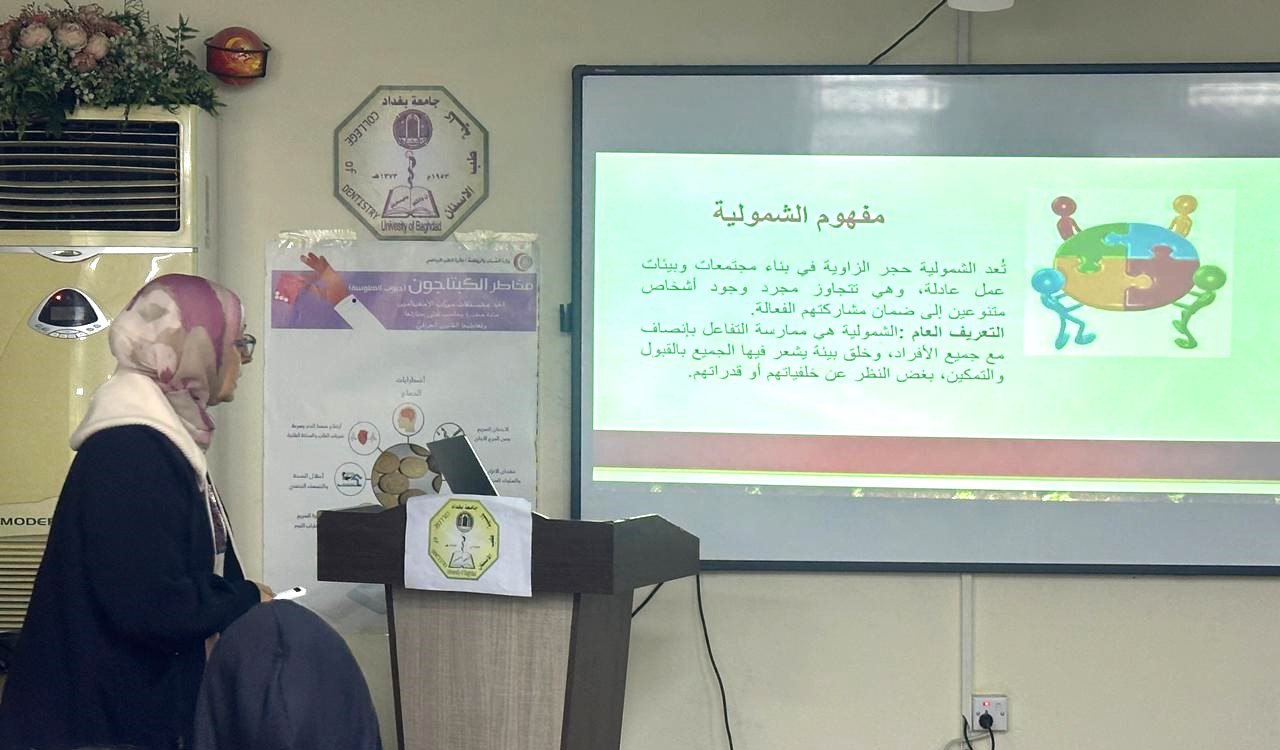
Under the patronage of the Dean of the College of Dentistry, Professor Dr. Ali Ismail Ibrahim, the College of Dentistry at the University of Baghdad – Rehabilitation and Employment Unit – organized a workshop as part of Global Entrepreneurship Week. The workshop, titled “Inclusion and Social Leadership,” was presented by Assistant Professor Dr. Sahar Hashim Abdul Karim and attended by a number of students, faculty members, and staff.
The workshop aimed to achieve sustainable development by building resilient communities that ensure no group is marginalized, reducing social gaps, and promoting equal opportunities for all, regardless of their background. It also focused on leveraging challenges and transforming them into effective opportunities that contribute to establishing environmental and social justice.
The workshop covered several key topics, most notably the concept of inclusion and its applications, with a focus on inclusion in education, particularly for marginalized children. It also reviewed the concept of social leadership, its objectives and pillars, and the essential characteristics that distinguish social leadership. The workshop also highlighted the importance of the complementary relationship between inclusivity and community leadership, with the latter serving as the executive tool for achieving inclusion. This integration plays a vital role in bridging development gaps and empowering marginalized groups.
The workshop recommended adopting innovative working models to address the root causes of societal problems in realistic ways and developing practical solutions to existing challenges. It also recommended establishing clear mechanisms for measuring short- and long-term social impact to ensure the sustainability of solutions and prevent them from being merely temporary or superficial. Furthermore, the workshop recommended expanding the concept of inclusion in the fields of education, health, and the workplace to encompass all excluded groups, thereby strengthening social cohesion and contributing to human capacity development.