Under the patronage of the esteemed Dean of the College of Dentistry, Professor Dr. Raghad Abdul Razzaq Mohammed,
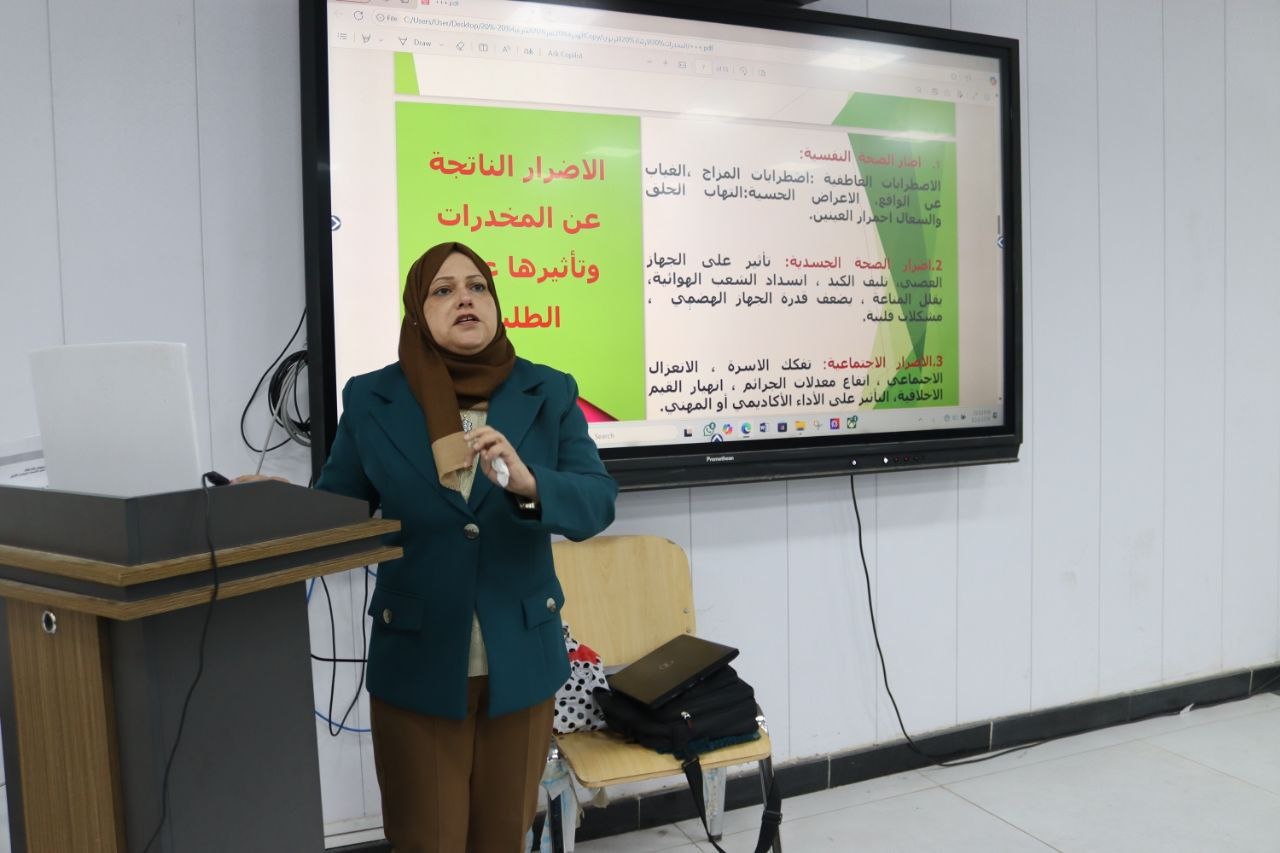
the College of Dentistry at the University of Baghdad, through the Media and Government Communication Division, organized a scientific seminar as part of Anti-Drug Week activities entitled “Raising Student Awareness of the Dangers of Drugs and the Role of Educational Institutions in Limiting Their Spread.”
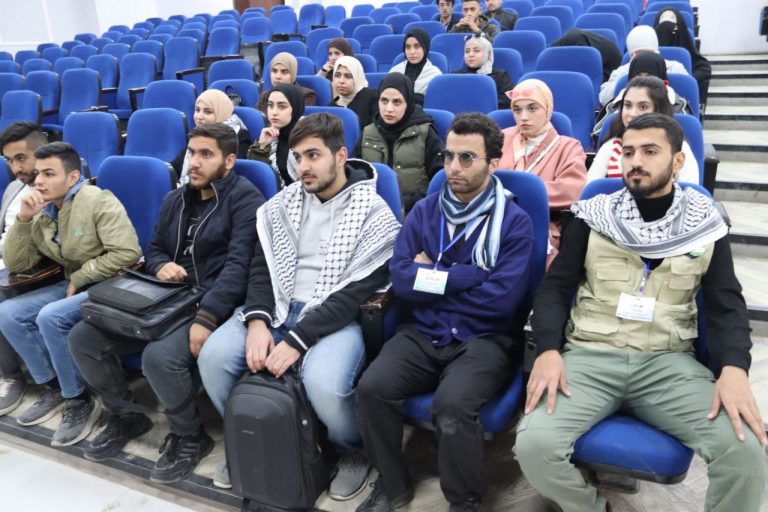
The seminar was delivered by Assistant Professor Dr. Maha Faisal Ahmed, with the attendance of third-year students at the college.
Objectives of the seminar:
- Highlighting the phenomenon of drug use.
- Raising students’ awareness of the dangers of drugs, their health and psychological harms, and methods of prevention.
- Clarifying the role of educational institutions in confronting the spread of drugs.
Topics covered in the seminar included:
- Definition of drugs: Natural or chemical substances that affect the human central nervous system, leading to changes in perception, behavior, and psychological state.
- Types of drugs: Natural/herbal or pharmaceutical substances with psycho-physical effects that pose a risk of dependency.
- Causes of drug use and addiction: Curiosity, the false belief that drugs help with forgetting, bad peer influence, difficult social and political conditions, unemployment, and poverty.
- Harms of drugs and their impact on students: Psychological health damage, physical health damage, social harms, and economic harms.
- Role of educational institutions: Serving as a frontline defense against addiction by building an aware generation capable of confronting this phenomenon through education, scientific research, guidance, awareness, and community service.
Recommendations of the seminar:
- Implement awareness programs for students focusing on the dangers of drugs and their negative impact on academic achievement and mental health.
- Teach students stress management and decision-making skills to help avoid risky behaviors such as drug use.
- Encourage participation in extracurricular activities like sports and arts as positive alternatives that improve academic performance and reduce the likelihood of drug use.
- Provide academic support and rehabilitation programs for students who have experienced drug use, to help them regain their academic level and overcome addiction-related challenges.
- Strengthen legal frameworks by enhancing laws that limit drug spread, in cooperation with legal authorities, to ensure a safe educational and health environment.
- Support research focusing on psychological and social factors leading to drug use among students, aiming to develop effective preventive strategies.
- Motivate media outlets to highlight the dangers of drugs and their negative impact on society’s structure.
- Activate the role of religious institutions in combating drugs through sermons, preaching, and religious guidance that reinforce spiritual and moral awareness of drug risks.
- Develop educational curricula to enhance their effectiveness in facing future challenges that society may encounter.
-